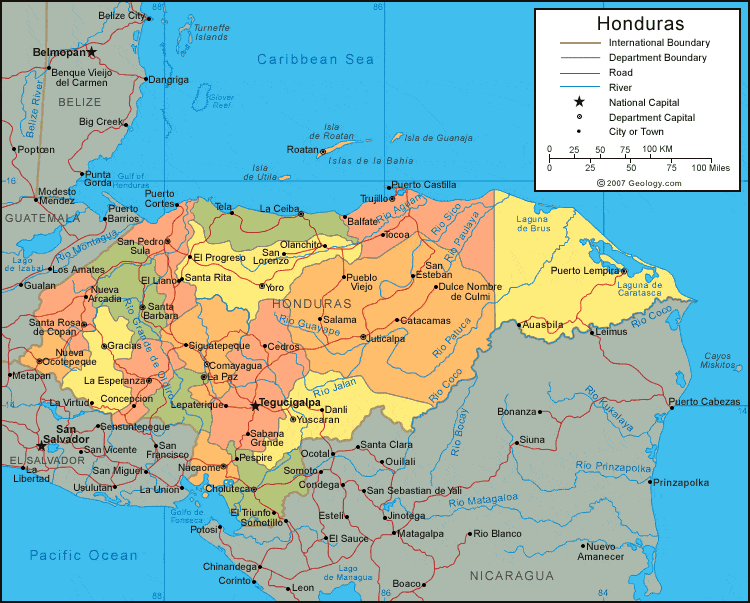
So things have gotten a little crazy here in the past couple of days… Before we talk about that, we’re going to talk about the things we have done in the past couple of weeks. Kevin finally finished his English class at the University. The majority of the kids even passed, although Shannon did have to take a test from a boy who was cheating and give him a zero. Kevin will not be teaching next semester but will be helping the new teacher out.
Our friend Calixto took us and our site-mate Elisabeth and her boyfriend to an awesome waterfall and the hike there was quite an adventure. To get there, we had to scale up three or four smaller waterfalls using rope (Calixto, of course, climbed without rope in order to tie the rope for us). At one point, Calixto put Elisabeth’s feet on top of his to help her scale down…he is quite amazing! It was a great experience and we were definitely sore the next day. The waterfall was beautiful as was the hike. We hiked rather high into the mountains where the water was fresh and pure (supposedly) and we drank straight from the creek. We haven’t gotten sick yet so the water must have been clean!
Kevin created a Peace Corps Honduras fantasy football league and at the last minute one of the guys had to drop out. Shannon and Elisabeth took his spot and have won both of their games so far. All of the guys are mad because Shannon and Elisabeth drafted players based on looks. The hot guys just seem to play better! This keeps us occupied during the weekends as we often have small parties to watch football and eat junk-food. Shannon has been cooking and baking a lot lately and made cinnamon rolls last weekend to eat while we watched the games. Kevin has also ventured into making homemade soda. He started by making a honey ginger ale from a recipe he found on the internet. It seemed a little watery with a very strong ginger aftertaste but it actually tastes good mixed with some lemonade (well, Shannon doesn’t really like it but others do). Next up, homemade cream soda. He plans on experimenting with many different flavors and recipes until he gets them just right.
A week and a half ago, we finally took our two male cats in to get neutered. Most male animals here in Honduras (and Latin America in general) do not get neutered. Many people believe that the animals get sad and/or lose their “manhood” when they get castrated but there are vets around that do the procedure. Plus, most animals here are not seen as pets like in the United States. They usually serve a purpose such as to catch mice or other unwanted animals and the majority of people do not buy packaged animal food for their animals. If they feed their animals, the feed them table scraps or they are left to scrounge through the garbage on the street. Here in the city, you can find packaged animal food, ours eat it, but it is still not super common. The vet did not put the cats to sleep, instead she gave them something to make them groggy and then used a local anesthesia. Shannon got to help by holding the cats in the air while the vet gave them the shots to drug them. After she was done with the surgery, she showed us their testicles and Baza’s were much larger even though he is the smaller cat (3 pounds versus Caramelo’s 4).
Things were just starting to get more normal around here. School had been sporadic for awhile as there was always some holiday, Dia del niño, dia del maestro, Independence Day…always some reason to miss class. Catacamas did not celebrate Independence Day which was kind of nice (very quiet without drums or fireworks) but very weird and sad at the same time since it is usually a big day filled with parades and activities, but they still cancelled classes for most of the week. This week classes were in session again and Shannon was happy to be working on Monday when Mel Zelaya, the ousted president, decided to come back and everything stopped. He is stationed inside the Brazilian embassy and troops are surrounding it and a van is supposedly parked out front playing the Honduran national anthem 24 hours a day. We are in the midst of a 50 hour curfew (nobody is supposed to leave their houses) which, according to the news, most people in Tegucigalpa seem to be obeying. Here, a lot of businesses and most schools are closed but people are still out and about. Needless to say, we are kind of bored. We were supposed to go to Tegucigalpa yesterday to talk to the married couples in training, but that got cancelled of course. This is the second time it has gotten cancelled due to political-related issues and it sucks. Hopefully things will get resolved soon but at least all is calm here in Catacamas.
Wednesday, September 23, 2009


Wednesday, September 9, 2009
Response to the comment from "Rob" after our previous post
First of, thanks for the comments and we will be looking forward to the postcards from the Great Smoky Mountains. Second, we are going to go ahead and leave the comment from “Rob” on here if you would like to read it and we are going to clarify a few things while we are at it. Also, we are not forcing anyone to read this so if you don’t like it, don’t read it.
The COLORS group is a biannual voluntary event that we can get up to 20 dollars per person reimbursed for travel, food and hotel costs. Twenty dollars may go much farther here than in the United States but that does not nearly cover our costs to go to the meeting. So, everyone who is there is doing it because they want to go. The idea of COLORS is to talk about and teach cultural awareness with a class of Honduran elementary school students. Rob makes a good point. Yes, some terms used in Spanish are considered endearing while the English translation would never be used in the United States. Blacky (negrita) was the example used in the blog post. No one we know would yell, “Hi Blacky” to a black person walking past them on the street in the U.S. Here, it is different. You can say negrita here but that doesn’t mean that all people to whom you say it appreciate it. In fact, a Honduran official just got removed from office for calling Obama “negrito”. I guess the Honduran government didn’t think the term was very endearing. In the class we talked to, we used the example gordito (fat). One kid said in front of us and the class that his family calls him gordito and that he does not like it. It might be an endearing term to his family but it was not to the boy in the class that was being called gordito. Another common thing here is calling all Asian people chino/china (Chinese). The locals have no problem with it but a Japanese person constantly being called chino, by acquaintances and strangers alike, might. Those are the issues we talk about, being aware of other cultures and some things that might be offensive to people of those other cultures. We are not trying to change them or “Americanize” them, just help them be aware of other cultures and their differences and we don’t think anything we have written in the blog has been racist or belittling against Hondurans in any way whatsoever.
The Religions Equality Meeting (REF) is a meeting solely for volunteers to get together and talk about their different beliefs in an open, friendly, and neutral environment completely amongst themselves. It is a fact that nearly 100% of the Honduran population consider themselves either Catholic or Evangelical and are in general much more religious than the average person from the United States. We ARE NOT religious missionaries and we ARE NOT here to promote our religious beliefs. But for many volunteers who have beliefs different from Catholics or Evangelicals (i.e. Muslim, Jewish, Buddhist or atheist to name a few) it can be hard not to feel pressured to attend one of those churches by community members you live with. It can also be hard and awkward to freely express your own religious views when asked about them, something you have to experience to completely understand. So REF is here for volunteers to talk to other volunteers and more than anything it was an experience for all volunteers involved to learn about other religions and beliefs themselves.
Everything we put in this blog is fact of things we have seen, heard, or experienced here in Honduras. Of course everyone’s experience is different so what you read in our blog is what we have experienced. We do not put our religious or political views in this blog. We are not sure how saying the upcoming election is going to be interesting implies that we are anti-democratic; far from it. We have talked about the situation enough in the past and didn’t need to repeat ourselves again by adding more than the word interesting.
“Your ideology is diseased, and you don't have the intellectual curiosity or the will to heal the tremendous damage that your economic system and culture have created.” Rob, feel free to leave some advice or better yet send us some literature that you think we should read, our address is on the blogsite. Yes, the Peace Corps is funded by the US government but it is all free aid, mostly in the form of teaching and training that the local communities are seeking and have asked for a volunteer to live in their community. We are not forcing them to adopt North American ways and are not providing them loans that they will never be able to pay off. If you want to point fingers, look somewhere else to place blame. Also, you mention my economic system and culture. Why don’t you tell us what economic system and culture you live in instead of trashing other peoples who you don’t even know.
“And, please, as one of the most racist groups of humans on earth today, understand your own deeply internalized racism before you look down on darker-skinned Hondurans as coming up wanting in that area. Your comments are vile and lack insight” This just doesn’t make sense. Why would we volunteer two years of our life to go somewhere where we look down on the people? You seem to be generalizing and stereotyping here which is exactly what we talk about in the COLORS meeting. Maybe what we have written is not the most eloquent but you have taken what we have written and totally misconstrued what was said. And our comments are “vile and lack insight”? Keep in mind, this blog has no agenda, despite what you may think. This is a blog for our friends and family to keep up to date on what is going on in our lives. So, sorry if it lacks insight for you, Rob. It was left on public view for anyone who might care to read it. Of course questions/comments are always welcome.
The COLORS group is a biannual voluntary event that we can get up to 20 dollars per person reimbursed for travel, food and hotel costs. Twenty dollars may go much farther here than in the United States but that does not nearly cover our costs to go to the meeting. So, everyone who is there is doing it because they want to go. The idea of COLORS is to talk about and teach cultural awareness with a class of Honduran elementary school students. Rob makes a good point. Yes, some terms used in Spanish are considered endearing while the English translation would never be used in the United States. Blacky (negrita) was the example used in the blog post. No one we know would yell, “Hi Blacky” to a black person walking past them on the street in the U.S. Here, it is different. You can say negrita here but that doesn’t mean that all people to whom you say it appreciate it. In fact, a Honduran official just got removed from office for calling Obama “negrito”. I guess the Honduran government didn’t think the term was very endearing. In the class we talked to, we used the example gordito (fat). One kid said in front of us and the class that his family calls him gordito and that he does not like it. It might be an endearing term to his family but it was not to the boy in the class that was being called gordito. Another common thing here is calling all Asian people chino/china (Chinese). The locals have no problem with it but a Japanese person constantly being called chino, by acquaintances and strangers alike, might. Those are the issues we talk about, being aware of other cultures and some things that might be offensive to people of those other cultures. We are not trying to change them or “Americanize” them, just help them be aware of other cultures and their differences and we don’t think anything we have written in the blog has been racist or belittling against Hondurans in any way whatsoever.
The Religions Equality Meeting (REF) is a meeting solely for volunteers to get together and talk about their different beliefs in an open, friendly, and neutral environment completely amongst themselves. It is a fact that nearly 100% of the Honduran population consider themselves either Catholic or Evangelical and are in general much more religious than the average person from the United States. We ARE NOT religious missionaries and we ARE NOT here to promote our religious beliefs. But for many volunteers who have beliefs different from Catholics or Evangelicals (i.e. Muslim, Jewish, Buddhist or atheist to name a few) it can be hard not to feel pressured to attend one of those churches by community members you live with. It can also be hard and awkward to freely express your own religious views when asked about them, something you have to experience to completely understand. So REF is here for volunteers to talk to other volunteers and more than anything it was an experience for all volunteers involved to learn about other religions and beliefs themselves.
Everything we put in this blog is fact of things we have seen, heard, or experienced here in Honduras. Of course everyone’s experience is different so what you read in our blog is what we have experienced. We do not put our religious or political views in this blog. We are not sure how saying the upcoming election is going to be interesting implies that we are anti-democratic; far from it. We have talked about the situation enough in the past and didn’t need to repeat ourselves again by adding more than the word interesting.
“Your ideology is diseased, and you don't have the intellectual curiosity or the will to heal the tremendous damage that your economic system and culture have created.” Rob, feel free to leave some advice or better yet send us some literature that you think we should read, our address is on the blogsite. Yes, the Peace Corps is funded by the US government but it is all free aid, mostly in the form of teaching and training that the local communities are seeking and have asked for a volunteer to live in their community. We are not forcing them to adopt North American ways and are not providing them loans that they will never be able to pay off. If you want to point fingers, look somewhere else to place blame. Also, you mention my economic system and culture. Why don’t you tell us what economic system and culture you live in instead of trashing other peoples who you don’t even know.
“And, please, as one of the most racist groups of humans on earth today, understand your own deeply internalized racism before you look down on darker-skinned Hondurans as coming up wanting in that area. Your comments are vile and lack insight” This just doesn’t make sense. Why would we volunteer two years of our life to go somewhere where we look down on the people? You seem to be generalizing and stereotyping here which is exactly what we talk about in the COLORS meeting. Maybe what we have written is not the most eloquent but you have taken what we have written and totally misconstrued what was said. And our comments are “vile and lack insight”? Keep in mind, this blog has no agenda, despite what you may think. This is a blog for our friends and family to keep up to date on what is going on in our lives. So, sorry if it lacks insight for you, Rob. It was left on public view for anyone who might care to read it. Of course questions/comments are always welcome.
Thursday, September 3, 2009
Adventures in the West
So it’s been awhile since we’ve written and a lot has happened in the past month. There are four support groups in Peace Corps Honduras and we have been to the meetings for three of them in the past month! First we went to COLORS which is to promote racial equality and understanding. For this meeting we did a talk at a local school which went really well as the people here don’t really know much about racial equality and often call people “negrito” (blacky) and other racial slurs that most people do not appreciate. We then spent the night at our friend Ellie’s site which is where we did the talk. She lives right on the outskirts of a large protected area and her site is beautiful! We swam in her lagoon and enjoyed the coolness. Then Shannon went to a VOS (Volunteers Offering Support) meeting near Tegucigalpa in the protected area of La Tigra while Kevin went on home. People were chosen for these positions and trained to take calls from volunteers in need of support. She was also voted the communications officer for this group and is now in charge of a monthly newsletter as well as various other duties. It was a great training in the cool mountains and she felt refreshed and ready to tackle another year in Honduras. The next weekend we visited some volunteers in Olancho so Shannon could do her Emergency Zone visits and went to a cave north of where we live.
Two weeks ago we went to the town of Gracias in the department of Lempira way out on the west side of Honduras for the REF (Religious Equality Forum) meeting. It was very interesting to learn about everyone’s different religious beliefs as well as the pressures from Hondurans to attend their churches and adopt their religions. Most Hondurans are either Catholic or Evangelical and are not very understanding or accepting of other religions which can be frustrating for many volunteers. Next, we climbed Celaque, the tallest mountain in Honduras at 2,849 meters. It was not a very long hike but VERY steep and strenuous. At parts we had to hold on to roots to pull ourselves up. It was a fabulous hike and very interesting to see all of the different plants and changing ecosystems as we climbed in elevation. On the way up we took a different trail and climbed another mountain (we did not realize this ahead of time) that was about 2,300 meters! It was an awesome hike but we were a little sad when we realized that we were going down instead of up and that there loomed another mountain in front of us! But we did see our first Honduran deer, Honduras’ national symbol of their fauna, since we have been here. People always tell us there are deer in Honduras but for the most part they have been hunted to near extinction now we finally believe that they exist! We camped a little below the top at a basic campsite that had a little covered space for a tent and a primitive latrine. There was a tarantula but Shannon is getting much better and only freaked out a little. It was really cold at night and we nearly froze to death! It was much too wet to start a fire so we went to bed at 6:30! The next day we hiked the hour and a half to the top. The view was not great as there were lots of trees and clouds but it was worthwhile.
After conquering Celaque, we went to the quaint town of Santa Rosa de Copan. It is probably the nicest town we have been to in Honduras. The central park looked like it could be in the U.S. and we ate at a great Mexican restaurant and had delicious margaritas! It was nice to feel like we were back in civilization for a little while. Then we went a couple of hours farther to our friend Justin’s site. He used to live close to us in Olancho but was moved for security reasons. His site is tiny with less than 200 people and you have to hike up a mountain from the road to get there. It was very relaxing. We went from there about 30 minutes away to another site where the volunteer has done a bee project. Kevin is interested in starting one here so we looked at the hives and talked to the owner about the steps needed to start such a project. It was very interesting and the honey was delicious! It was nice and cool in the mountains and nice to be in smaller sites for a change.
We then went back to Gracias for the MARV (Married Volunteers) meeting. We are in charge of this group so we had set everything up. It was good to meet the new married couples and talk about things that affect us that other volunteers do not deal with. We went to the quaint little town of La Campa about an hour away where they make a lot of Lencan (an Indian tribe) pottery common to the region. We also took advantage of the hot springs in Gracias and enjoyed a night there. It was a nice vacation/break from the unbearable heat and humidity of Catacamas. It left us feeling refreshed and ready to get back to work.
Things are relatively back to normal here in Catacamas. The university where Kevin works started back up about two weeks ago and the schools now have classes three days a week which is better than none. Thursdays and Fridays are still reserved for strikes and marches. A couple of days before we left on our trek a march passed by our house at about 8:00 PM. It was peaceful, pro-Mel with lots of motorcycles, cars honking, and people carrying candles. It lasted about 20 minutes and we were invited numerous times to join in (we of course said no). The schools in all of Honduras usually have large parades to celebrate Independence Day but this year none of the public schools in Catacamas are going to participate because they do not believe that they have independence right now. This is a big deal because Independence Day is huge here and the students spend months before preparing and practicing.
Campaigning for the upcoming elections began last Sunday and there are now trucks driving around playing Shannon’s least favorite song “El Chofer” with the words changed to the appropriate party (“viva el partido liberal/nacional/etc”). It’s quite annoying and we have two and a half months to enjoy it. The elections should be interesting as people are still upset about the coup. It will be an experience!
Two weeks ago we went to the town of Gracias in the department of Lempira way out on the west side of Honduras for the REF (Religious Equality Forum) meeting. It was very interesting to learn about everyone’s different religious beliefs as well as the pressures from Hondurans to attend their churches and adopt their religions. Most Hondurans are either Catholic or Evangelical and are not very understanding or accepting of other religions which can be frustrating for many volunteers. Next, we climbed Celaque, the tallest mountain in Honduras at 2,849 meters. It was not a very long hike but VERY steep and strenuous. At parts we had to hold on to roots to pull ourselves up. It was a fabulous hike and very interesting to see all of the different plants and changing ecosystems as we climbed in elevation. On the way up we took a different trail and climbed another mountain (we did not realize this ahead of time) that was about 2,300 meters! It was an awesome hike but we were a little sad when we realized that we were going down instead of up and that there loomed another mountain in front of us! But we did see our first Honduran deer, Honduras’ national symbol of their fauna, since we have been here. People always tell us there are deer in Honduras but for the most part they have been hunted to near extinction now we finally believe that they exist! We camped a little below the top at a basic campsite that had a little covered space for a tent and a primitive latrine. There was a tarantula but Shannon is getting much better and only freaked out a little. It was really cold at night and we nearly froze to death! It was much too wet to start a fire so we went to bed at 6:30! The next day we hiked the hour and a half to the top. The view was not great as there were lots of trees and clouds but it was worthwhile.
After conquering Celaque, we went to the quaint town of Santa Rosa de Copan. It is probably the nicest town we have been to in Honduras. The central park looked like it could be in the U.S. and we ate at a great Mexican restaurant and had delicious margaritas! It was nice to feel like we were back in civilization for a little while. Then we went a couple of hours farther to our friend Justin’s site. He used to live close to us in Olancho but was moved for security reasons. His site is tiny with less than 200 people and you have to hike up a mountain from the road to get there. It was very relaxing. We went from there about 30 minutes away to another site where the volunteer has done a bee project. Kevin is interested in starting one here so we looked at the hives and talked to the owner about the steps needed to start such a project. It was very interesting and the honey was delicious! It was nice and cool in the mountains and nice to be in smaller sites for a change.
We then went back to Gracias for the MARV (Married Volunteers) meeting. We are in charge of this group so we had set everything up. It was good to meet the new married couples and talk about things that affect us that other volunteers do not deal with. We went to the quaint little town of La Campa about an hour away where they make a lot of Lencan (an Indian tribe) pottery common to the region. We also took advantage of the hot springs in Gracias and enjoyed a night there. It was a nice vacation/break from the unbearable heat and humidity of Catacamas. It left us feeling refreshed and ready to get back to work.
Things are relatively back to normal here in Catacamas. The university where Kevin works started back up about two weeks ago and the schools now have classes three days a week which is better than none. Thursdays and Fridays are still reserved for strikes and marches. A couple of days before we left on our trek a march passed by our house at about 8:00 PM. It was peaceful, pro-Mel with lots of motorcycles, cars honking, and people carrying candles. It lasted about 20 minutes and we were invited numerous times to join in (we of course said no). The schools in all of Honduras usually have large parades to celebrate Independence Day but this year none of the public schools in Catacamas are going to participate because they do not believe that they have independence right now. This is a big deal because Independence Day is huge here and the students spend months before preparing and practicing.
Campaigning for the upcoming elections began last Sunday and there are now trucks driving around playing Shannon’s least favorite song “El Chofer” with the words changed to the appropriate party (“viva el partido liberal/nacional/etc”). It’s quite annoying and we have two and a half months to enjoy it. The elections should be interesting as people are still upset about the coup. It will be an experience!
Tuesday, August 4, 2009
Will Things Ever Return to Normal? No Creemos
So things are still very boring around here. We are now allowed to travel as long as we don't go through Tegucigalpa, the capital. Too bad we have to pass through there to go almost anywhere... Our friend Elizabeth lives on our side of Tegucugalpa and was able to visit us last week! We had a great time watching lots of movies and eating lots of junk food.
In the past five weeks there have been five days of classes at the public schools here and even less at the university. This is extremely frustrating as we both have little work to do and the kids are missing out on so many days of class which will not be made up. It's very discouraging. Most other places have resumed classes but since we live in the ousted president's hometown the strikes continue. Shannon's English classes have resumed, but many of the teachers from her level one class stopped coming in the four weeks that the schools were locked. Her class started at 30 people and now has about 10! There are still marches and roadblocks but they are getting less common. Zelaya, the ousted president, came into Honduras for about 20 minutes two weeks ago. He then went back to Nicaragua where he proceeded to camp out for a week or so. Needless to say, nothing came of it and he is supposedly going to resume talks. We really don't follow the news of the coup anymore because nothing happens. The new group of volunteers was finally able to make it here after three weeks in the Dominican Republic (lucky) and a week stuck in Miami (even luckier).
Some good news for Shannon, one of the German volunteers talked to our next door neighbor and convinced him to stop harassing Shannon every time she walked by. He apologized and said (in English) "friends?". This makes her life a lot better as she walks by his house numerous times each day and no longer has to hear, "Hello baby, No soy su bebe (mocking her because that is what she said to him)" and the other annoying comments he would always make. Now he says good morning which is much better.
We are hoping work picks up or we may go insane. Shannon has started doing crafts to pass the time and we both read a lot (Shannon read seven books in July!) and of course watch T.V.! Who knew that a coup d'etat could be so boring?
In the past five weeks there have been five days of classes at the public schools here and even less at the university. This is extremely frustrating as we both have little work to do and the kids are missing out on so many days of class which will not be made up. It's very discouraging. Most other places have resumed classes but since we live in the ousted president's hometown the strikes continue. Shannon's English classes have resumed, but many of the teachers from her level one class stopped coming in the four weeks that the schools were locked. Her class started at 30 people and now has about 10! There are still marches and roadblocks but they are getting less common. Zelaya, the ousted president, came into Honduras for about 20 minutes two weeks ago. He then went back to Nicaragua where he proceeded to camp out for a week or so. Needless to say, nothing came of it and he is supposedly going to resume talks. We really don't follow the news of the coup anymore because nothing happens. The new group of volunteers was finally able to make it here after three weeks in the Dominican Republic (lucky) and a week stuck in Miami (even luckier).
Some good news for Shannon, one of the German volunteers talked to our next door neighbor and convinced him to stop harassing Shannon every time she walked by. He apologized and said (in English) "friends?". This makes her life a lot better as she walks by his house numerous times each day and no longer has to hear, "Hello baby, No soy su bebe (mocking her because that is what she said to him)" and the other annoying comments he would always make. Now he says good morning which is much better.
We are hoping work picks up or we may go insane. Shannon has started doing crafts to pass the time and we both read a lot (Shannon read seven books in July!) and of course watch T.V.! Who knew that a coup d'etat could be so boring?
Friday, July 24, 2009
Kevin's trip to La Moskitia
On Friday, July 17 I left with the 3rd year natural resources students, some faculty and guides in pipantes (large canoes made of one solid piece of wood) on a six day trip on the Patuca River down to the community of Wampusirpi and back upriver. The Patuca River forms one edge of the Rio Platano Biosphere Reserve and is in the middle of what is called La Moskitia, the largest preserved primary forest in Central America. Basically we went to the middle of the jungle. A huge plus of going with the students was that all expenses were paid by the university and an NGO named Proyecto Corazon.
The first day involved leaving the house at 5:40 in the morning and meeting everyone at the university. Then we drove for 3-4 hours on dirt/mud roads to our departing point on Rio Cuyamel. We loaded up two pipantes with six days of food and tents and sleeping bags and the personal things of 19 people going on the trip. The first day involved a lot of getting in and out of the boats to walk around the rapids so we wouldn't tip over. It involved a lot of walking on land and through the water, often waist high or sometimes deeper. It started pouring that afternoon while we were in the boats and we all had ponchos but as we were so we already, no one even used them. We spent the first night at one of the boat conductors house at the junction with Rio Patuca. We unloaded both boats and in the morning we loaded everything into one much larger boat as Rio Patuca is a much larger river that can handle bigger boats. We spent a few hours in the boat going down river until we arrived at the small community of Krausirpi, where native Tawahkas live. There are several very small communities strung out along the river the entire way. That evening we went upriver to a small community to where some students from Tegucigalpa are conducting studies on local animals including Jaguars, fish, rats, and bats. That night we set up a bat catching net so see how it was done and caught two types of bat, one a vampire bat. Krausirpi had a gas generator that powered several houses with power for a few hours each night. Day three we went on downriver to Wampusirpi where, amazingly, they have a giant cell tower for Digicel, one of the cell phone companies here, and they even had internet. We walked around the town and talked to some local people and learned about the chocolate processing they did as the area's income relies a heavily on the large amounts of chocolate farms in the area as well as some ecotourism. We all stayed at a convent that night and headed back to Krausirpi the next afternoon were we stayed one more night. The fifth day we headed back to the junction of Rio Patuca and Rio Cuyamel again and camped on the beach this time. I also talked to some people who were panning for gold and even had gas powered machines to help them. The gold only comes in small flakes and never in nuggets and our boat driver pays for everything with gold. A boat comes by his place twice a month to deliver what he had requested the time before. There is no cell coverage there. In fact, about an hour drive out of Catacamas we lost cell coverage for the entire trip except for Wampusirpi. They also find very small rubies in the river, but too small to be worth anything. That night it poured and poured and we sat and talked and played volleyball in the river as we were already soaked anyway. I only listened as they were speaking Spanish of course. The river was warmer than the air and rain at that point and we finally got out and went to bed sometime well after dark. We had cup soup and tortillas with packets of refried beans to eat for dinner. The next morning we headed back up Rio Cuyamel and the river had dropped since we had come down and was about 70% of normal flow, which meant more rocks and hazards and slower going upriver. It took several hours and then several more to drive back to Catacamas and we finally made it back at about 8:30 when we stopped at the Texaco to have some fried chicken and french fries for dinner and, of course, Coke.
The trip was an awesome experience to go traveling by boat, the only form of transportation in the area until Wampusirpi which has a small airstrip, into the middle of the jungle. We saw Coati, monkeys, iguanas, crocodiles, wild makaws and other birds, frogs, insects and various types of trees and plants. I got to practice my spanish A LOT as everyone of course spoke Spanish. One facutly member speaks good English so he was able to help me out a lot when I needed it. In the communities we visited, many people speak 3 languages, Spanish which is taught in schools, Miskito and Tawahka, both native languages in the region. It was interesting to see how the people lived there and also to see how the outside world has drastically influenced the area. A giant cell tower in the middle of nowhere with internet. Coke, Pepsi, Tropical, Mirinda and other sodas. Wampusirpi had Schlitz Malt Liquor, I don't even see that in Catacamas, not that I want to. All types of chips and other normal Honduran snacks as well. Now I can only sit and wait until my next adventure begins.
The first day involved leaving the house at 5:40 in the morning and meeting everyone at the university. Then we drove for 3-4 hours on dirt/mud roads to our departing point on Rio Cuyamel. We loaded up two pipantes with six days of food and tents and sleeping bags and the personal things of 19 people going on the trip. The first day involved a lot of getting in and out of the boats to walk around the rapids so we wouldn't tip over. It involved a lot of walking on land and through the water, often waist high or sometimes deeper. It started pouring that afternoon while we were in the boats and we all had ponchos but as we were so we already, no one even used them. We spent the first night at one of the boat conductors house at the junction with Rio Patuca. We unloaded both boats and in the morning we loaded everything into one much larger boat as Rio Patuca is a much larger river that can handle bigger boats. We spent a few hours in the boat going down river until we arrived at the small community of Krausirpi, where native Tawahkas live. There are several very small communities strung out along the river the entire way. That evening we went upriver to a small community to where some students from Tegucigalpa are conducting studies on local animals including Jaguars, fish, rats, and bats. That night we set up a bat catching net so see how it was done and caught two types of bat, one a vampire bat. Krausirpi had a gas generator that powered several houses with power for a few hours each night. Day three we went on downriver to Wampusirpi where, amazingly, they have a giant cell tower for Digicel, one of the cell phone companies here, and they even had internet. We walked around the town and talked to some local people and learned about the chocolate processing they did as the area's income relies a heavily on the large amounts of chocolate farms in the area as well as some ecotourism. We all stayed at a convent that night and headed back to Krausirpi the next afternoon were we stayed one more night. The fifth day we headed back to the junction of Rio Patuca and Rio Cuyamel again and camped on the beach this time. I also talked to some people who were panning for gold and even had gas powered machines to help them. The gold only comes in small flakes and never in nuggets and our boat driver pays for everything with gold. A boat comes by his place twice a month to deliver what he had requested the time before. There is no cell coverage there. In fact, about an hour drive out of Catacamas we lost cell coverage for the entire trip except for Wampusirpi. They also find very small rubies in the river, but too small to be worth anything. That night it poured and poured and we sat and talked and played volleyball in the river as we were already soaked anyway. I only listened as they were speaking Spanish of course. The river was warmer than the air and rain at that point and we finally got out and went to bed sometime well after dark. We had cup soup and tortillas with packets of refried beans to eat for dinner. The next morning we headed back up Rio Cuyamel and the river had dropped since we had come down and was about 70% of normal flow, which meant more rocks and hazards and slower going upriver. It took several hours and then several more to drive back to Catacamas and we finally made it back at about 8:30 when we stopped at the Texaco to have some fried chicken and french fries for dinner and, of course, Coke.
The trip was an awesome experience to go traveling by boat, the only form of transportation in the area until Wampusirpi which has a small airstrip, into the middle of the jungle. We saw Coati, monkeys, iguanas, crocodiles, wild makaws and other birds, frogs, insects and various types of trees and plants. I got to practice my spanish A LOT as everyone of course spoke Spanish. One facutly member speaks good English so he was able to help me out a lot when I needed it. In the communities we visited, many people speak 3 languages, Spanish which is taught in schools, Miskito and Tawahka, both native languages in the region. It was interesting to see how the people lived there and also to see how the outside world has drastically influenced the area. A giant cell tower in the middle of nowhere with internet. Coke, Pepsi, Tropical, Mirinda and other sodas. Wampusirpi had Schlitz Malt Liquor, I don't even see that in Catacamas, not that I want to. All types of chips and other normal Honduran snacks as well. Now I can only sit and wait until my next adventure begins.
Friday, July 17, 2009
Murders and Strikes
So things are still not back to normal here. School was supposed to start this week and did in some places, just not here. Kids actually went to school Monday but the teachers refused to have classes. The university students at the university where Kevin works went on strike because they were afraid that the university was not going to have enough money to finish the school year (which is supposedly true). Then all but the external classes were canceled so the students could go to the marches in support of Zelaya. On Thursday we both went to Kevin's English class and it turned out to be the only class in the entire school that day because all the teachers went to the march. The students were mad but we decided that they needed to learn since they are the worst class ever. At least it gave us something to do! Shannon did an HIV/AIDS training last week at one of the private high schools since they still have classes. She was happy to be able to work and the training went really well. The kids gave great feedback, participated, and really seemed to enjoy it as well as learned something (their post-test scores were significantly higher than their pre-test scores).
On Monday Shannon had quite a disturbing experience that broke the monotony. She went to CEREPA thinking that she would be able to do her dental hygiene program because there were supposed to be classes, only to find out that a patient had come in Friday and died of a heart-attack early Sunday morning. It was decided that personnel from CEREPA should attend the funeral and Shannon was chosen as one of the people to go. She went with four of her co-workers and they had only been there for about five minutes when she heard a gunshot. This is pretty normal here and nobody really paid attention. She noticed that it seemed louder than normal so she looked and saw a man in a cowboy hat with a pistol walking behind another man. He shot the man two times in the back while she watched! She saw two blood spots begin to form on the man's chest and he started to fall. Chaos ensued and everyone started running and screaming. Her co-workers yelled "corra Shannon, corra" and she ran like the wind. They ran to a little store and took shelter. The police and ambulance came quickly but only stayed a few minutes as the shooter had fled the scene. The driver from CEREPA picked them up and the rest of the day was uneventful. The murderer was supposedly drunk and killed the other man over "cosas personales". He has since been arrested and sent to jail. Now the talk at CEREPA is how fast Shannon runs, how she witnessed a murder like in a "Hollywood movie", and how scared one of her co-workers was. She is surprisingly unaffected; we chalk it up to hearing about things like this all the time so it seems commonplace. She hopes to never witness a murder again!
Kevin got the opportunity to go with the university on a canoe trip through La Moskitia, a biological reserve. He left yesterday and will return Wednesday. It was all very last minute as the trip had been canceled and rescheduled very quickly. He was almost not able to go as all trips through this area require pre-approval from Peace Corps. Luckily our country director and the director of safety and security worked with him to get everything done last night. There is only one cell company that gets reception out there and his trip hinged on getting a chip from them for his phone. Shannon, like the good wife that she is, had to run around at 6:00 PM last night in the rain searching for a place that was still open that sold Digicel chips. Kevin was at a meeting at the university and was unable to do it himself. She had given up hope when she ran into some very nice men who called all their friends until they found a place. The trip was saved! She's just jealous that she couldn't go too!
On Monday Shannon had quite a disturbing experience that broke the monotony. She went to CEREPA thinking that she would be able to do her dental hygiene program because there were supposed to be classes, only to find out that a patient had come in Friday and died of a heart-attack early Sunday morning. It was decided that personnel from CEREPA should attend the funeral and Shannon was chosen as one of the people to go. She went with four of her co-workers and they had only been there for about five minutes when she heard a gunshot. This is pretty normal here and nobody really paid attention. She noticed that it seemed louder than normal so she looked and saw a man in a cowboy hat with a pistol walking behind another man. He shot the man two times in the back while she watched! She saw two blood spots begin to form on the man's chest and he started to fall. Chaos ensued and everyone started running and screaming. Her co-workers yelled "corra Shannon, corra" and she ran like the wind. They ran to a little store and took shelter. The police and ambulance came quickly but only stayed a few minutes as the shooter had fled the scene. The driver from CEREPA picked them up and the rest of the day was uneventful. The murderer was supposedly drunk and killed the other man over "cosas personales". He has since been arrested and sent to jail. Now the talk at CEREPA is how fast Shannon runs, how she witnessed a murder like in a "Hollywood movie", and how scared one of her co-workers was. She is surprisingly unaffected; we chalk it up to hearing about things like this all the time so it seems commonplace. She hopes to never witness a murder again!
Kevin got the opportunity to go with the university on a canoe trip through La Moskitia, a biological reserve. He left yesterday and will return Wednesday. It was all very last minute as the trip had been canceled and rescheduled very quickly. He was almost not able to go as all trips through this area require pre-approval from Peace Corps. Luckily our country director and the director of safety and security worked with him to get everything done last night. There is only one cell company that gets reception out there and his trip hinged on getting a chip from them for his phone. Shannon, like the good wife that she is, had to run around at 6:00 PM last night in the rain searching for a place that was still open that sold Digicel chips. Kevin was at a meeting at the university and was unable to do it himself. She had given up hope when she ran into some very nice men who called all their friends until they found a place. The trip was saved! She's just jealous that she couldn't go too!
Thursday, July 9, 2009
Shannon's Reflections on One Year in Honduras
So today is our one-year anniversary of arriving in Honduras and we usually write these things together, but I thought I would write my own today as I reflect on my year in Honduras.
I have had so many experiences that I could never have fathomed before coming such as learning to share my house (although not happily) with so many bugs and even spiders; not freaking out every time I see a spider (only if it is really big); washing my dishes and my body in dirty water after a rain and thinking that it is better than not having any water; getting used to the electricity and water disappearing, sometimes for days at a time; washing all of my clothes by hand; cooking; walking everywhere in the heat and humidity; getting harassed by EVERY man I walk past; eating my body weight in beans and realizing that I really like them (rice, however, I could do without); seeing children running around half-dressed, half-fed, and usually sans shoes and not thinking anything of it; talking about bowl movements all the time including at dinner; becoming accustomed to the smell of burning trash; liking beets; and eating whole fish with the fins and eyeballs (I didn't eat those parts but they were there looking at me).
I have also learned a lot of things in my year here. I now no longer take so many things for granted... good food (cheese), friends and family, being able to go places at night, being able to run alone, safety, having a decent/non-corrupt government, freedom of expression, all of the material things that we think are so important in the U.S. (washing machines, furniture, air conditioners, etc), and people who tell the truth to name a few.
I have also learned to get satisfaction in the small things in life: children yelling, "Hola Profe" and hugging me when I come to a school, an e-mail from home is great, a letter/postcard awesome, and a package the highlight of the month, home-cooked flour tortillas and beans made by a friend who knows that I love them, someone making me beans because they know that I don't eat meat, teaching a child something new, newly bathed cats meeting me at the door after a long day, the construction worker in my back yard who yelled at another construction worker for catcalling me, the freshness of newly mopped floors, spending time in the campo away from all the madness of the city, visiting other volunteers and catching up, and most importantly a phone call home.
Top 10 things I have learned here:
1. Do not judge a book by it's cover. There are so many people that I have met here that I never thought I would be friends with simply by the way they dressed or something that they said, who have turned out to be some of my best friends...now if only I can remember this when I get back to the U.S.
2. Speaking Spanish is exhausting and much harder than I had thought it would be!
3. Mantequilla (aka crema in the rest of the Spanish speaking world) is always bad no matter how many times I try it.
4. Washing clothes by had really isn't that bad...
5. No matter how much people complain about schools in the U.S., they could be much worse...
6. Putting birth control in the water may not be that bad of an idea...
7. Putting "fijase que" at the beginning of an excuse works every time! Also by saying "si Dios quiere" you can get out of any future situation. I mean, what if Dios didn't want me to go to that meeting?
8. I now understand why people of the same race/that speak the same language tend to hang out together. It's just so much easier to spend time with people with whom you can easily communicate without problems and share the same basic values.
9. Dinámicas (icebreakers) really make everything better.
10. ANY television program in English is usually better than one in Spanish.
It's so hard to believe that a year has passed. Overall that experience so far has been great, I have learned so many things and continue to learn new things everyday! So many of my expectations were wrong (I never thought that we would live in a city twice as big as Reedley, have electricity, let alone cable and internet in our house!) but I have learned to be a bit more flexible. We still have one year, two months, and fifteen days left (not that I'm counting down or anything) and these, too, will hopefully fly by and before you know it we'll be home! I'm sure I'll learn a lot more in our remaining time, hopefully improve my Spanish a lot, and have many more experiences that I will carry with me forever!
I have had so many experiences that I could never have fathomed before coming such as learning to share my house (although not happily) with so many bugs and even spiders; not freaking out every time I see a spider (only if it is really big); washing my dishes and my body in dirty water after a rain and thinking that it is better than not having any water; getting used to the electricity and water disappearing, sometimes for days at a time; washing all of my clothes by hand; cooking; walking everywhere in the heat and humidity; getting harassed by EVERY man I walk past; eating my body weight in beans and realizing that I really like them (rice, however, I could do without); seeing children running around half-dressed, half-fed, and usually sans shoes and not thinking anything of it; talking about bowl movements all the time including at dinner; becoming accustomed to the smell of burning trash; liking beets; and eating whole fish with the fins and eyeballs (I didn't eat those parts but they were there looking at me).
I have also learned a lot of things in my year here. I now no longer take so many things for granted... good food (cheese), friends and family, being able to go places at night, being able to run alone, safety, having a decent/non-corrupt government, freedom of expression, all of the material things that we think are so important in the U.S. (washing machines, furniture, air conditioners, etc), and people who tell the truth to name a few.
I have also learned to get satisfaction in the small things in life: children yelling, "Hola Profe" and hugging me when I come to a school, an e-mail from home is great, a letter/postcard awesome, and a package the highlight of the month, home-cooked flour tortillas and beans made by a friend who knows that I love them, someone making me beans because they know that I don't eat meat, teaching a child something new, newly bathed cats meeting me at the door after a long day, the construction worker in my back yard who yelled at another construction worker for catcalling me, the freshness of newly mopped floors, spending time in the campo away from all the madness of the city, visiting other volunteers and catching up, and most importantly a phone call home.
Top 10 things I have learned here:
1. Do not judge a book by it's cover. There are so many people that I have met here that I never thought I would be friends with simply by the way they dressed or something that they said, who have turned out to be some of my best friends...now if only I can remember this when I get back to the U.S.
2. Speaking Spanish is exhausting and much harder than I had thought it would be!
3. Mantequilla (aka crema in the rest of the Spanish speaking world) is always bad no matter how many times I try it.
4. Washing clothes by had really isn't that bad...
5. No matter how much people complain about schools in the U.S., they could be much worse...
6. Putting birth control in the water may not be that bad of an idea...
7. Putting "fijase que" at the beginning of an excuse works every time! Also by saying "si Dios quiere" you can get out of any future situation. I mean, what if Dios didn't want me to go to that meeting?
8. I now understand why people of the same race/that speak the same language tend to hang out together. It's just so much easier to spend time with people with whom you can easily communicate without problems and share the same basic values.
9. Dinámicas (icebreakers) really make everything better.
10. ANY television program in English is usually better than one in Spanish.
It's so hard to believe that a year has passed. Overall that experience so far has been great, I have learned so many things and continue to learn new things everyday! So many of my expectations were wrong (I never thought that we would live in a city twice as big as Reedley, have electricity, let alone cable and internet in our house!) but I have learned to be a bit more flexible. We still have one year, two months, and fifteen days left (not that I'm counting down or anything) and these, too, will hopefully fly by and before you know it we'll be home! I'm sure I'll learn a lot more in our remaining time, hopefully improve my Spanish a lot, and have many more experiences that I will carry with me forever!
Subscribe to:
Posts (Atom)