Monday, November 1, 2010
Cali
At first glance, Cali seemed like a big ugly city but once we explored a little it got better! We walked all around the first day and saw all the churches and old buildings. We also went to a giant mall to people watch. Supposedly the most beautiful women and the plastic surgery capital are in Cali but we saw neither. We did eat some yummy vegetarian food (there were a ton of vegetarian restaurants which made Shannon happy) and went to a zoo. The Cali zoo is supposedly the largest zoo in South America and it was cool. We saw a lot of different animals including a bird that kept landing on Kevin´s head and bit Shannon when she tried to get it off! We also took some salsa classes at our hotel. The first day was a little hard but the second day was definitely better and we learned a bit and had fun! We were sad that we didn´t get to meet up with our friend from Cali but she was busy with a project so next time. After Cali, we went to Pasto, a town near the Ecuador border. It was a lot larger and more modern than we had thought it would be. We walked around and saw the really cool churches and the next day headed to Túquerres to hike to Laguna Verde, a green lagoon in the crater of a volcano. Everyone in Pasto told us it was very easy to get to but those were lies, and we ended up hiring a very expensive taxi (even after Shannon´s mad bargaining skills) to take us up the mountain to the trail. The hike was a bit hard mainly because of the altitude. The highest point was about 4,000 meters (the highest Shannon had ever been). The walk back up from the laguna involved about a million stairs and a steep climb that nearly killed Shannon! The laguna was really pretty though, super green with lots of bubbles. We originally thought the volcano was extinct but it turned out to be active. It smelled strongly of sulfer and some of the bubbles going into the lake heated the water to a nice temperature. On our way down after walking forever, we finally caught a ride with a SUV going down. We stood on the back bumper and held on to the luggage racks...quite a ride! We then headed to Las Lajas to see the Santuario de Las Lajas. It is a church built into the side of a gorge with a river running under it. It is an amazing sight, just for the location alone and the church is impressive as well. We are pretty sure that we were the only ones staying in the entire town and finding dinner was hard since everything was closed! The next day we headed into Ecuador and had the easiest border crossing ever! We went to Otavalo, a small town about three hours from the border known for its Saturday market. We happened to arrive on a Saturday and we treated to the best/most impressive market we have ever seen! There were beautiful fruits and vegetables including real blackberries which we haven´t seen for two years! They also had tons of crafts and of course clothes and scarves made from Alpaca. It was really a sight especially with all the local people dressed in their traditional outfits! We are now in Quito and have been all over admiring the buildings and churches in the old town. Quito is a huge city and the highest capital in the western hemisphere with an elevation of 2,850 meters. Right now they are having a three day holiday so the city is rather dead. Tomorrow we head to Galápagos to see amazing animals!


Wednesday, October 27, 2010
Salenta, Valle de Cocora, Bogota
After leaving lovely Medellín we headed to the small coffee and trout farming (we had trout for the first time, kinda like salmon) town of Salento. The town itself is pretty nice but most foreign tourists come here to take a hike in the Valle de Cocora to see the famous wax palms of the area, the largest palm trees in the world that grow up to 60 meters tall (almost 200 feet). We had to take a jeep to the town of Cocora and then started hiking up the valley through mostly cattle ranches. We could see some wax palms growing up the sides of the narrow valley. We evntually walked into the national park up the steep muddy trail to about 2900 meters through cloud forest and then proceeded to walk back to Cocora along a dirt road that meandered through the wax palms themselves and was actually the highlight of the walk. The jeep ride back got crowded and Kevin ended up standing on the back bumper with six other people holding on underneath a tarp becuase it was raining. It was a little crowded back there and his arm was very tired from holding on to the jeep on all of the curves after we made it back. We left Salento the next day and took a nine hour bus trip to Bogotá, the capital of Colombia with 8.5 million inhabitants, one of which we knew from Peace Corps Honduras. We stayed in or around Bogota for five nights, leaving on the sixth. Bogotá is a huge sprawling city that reminded us of LA except it was in a valley. We rode up to Monserrate, a hill on the valley wall, to see the massive expanse of Bogotá. The views are pretty good, unfortunately one of the many rainstorms started forming just before we went so part of the city was obscured by clouds and rain. We walked around La Candelaría, the colonial barrio of Bogotá, to see the old churches, museums and the giant Plaza de Bolívar that is home to hundreds of pigeons. The gold museum in the city center is pretty impressive as well. We also went to La Casa de Moneda which houses a few museums, one on the printing of money and one on Fernando Botero, Shannon´s new favorite artist, who draws and sculpts funny looking fat things from animals to people. Over the weekend we made a side trip to the salt cathedral of Zipaquirá, Villa de Leyva and Tunja. The salt cathedral was an impressive cathedral (the second one built as the first one is now closed) carved underground in the salt mines that produce 95% of the salt consumed in the country. Cathedral might be a little misleading as there is no actual cathedral but the inside of the mine is carved with carvings depicting the stations of the cross, and they even hold mass inside of it. It was something totally different than anything we have seen before. After the salt cathedral we went to Villa de Leyva, one of the most bautiful colonial villages in Colombia. It was a very quaint, very colonial town that also had one of the largest plazas in South America. We also had some very tasty passionfruit cheesecake there, the best cheesecake we have had in a very long time. We really liked Villa de Leyva with its colonial style houses and cobblestone streets. The next morning we went to the regional capital of Boyacá, Tunja. Tunja is known for its colonial architecture, elegant mansions adorned with some of the most unique artwork in South America, and mudejar art in its churches. One of the churches was very impressive with all of the designs and art on the walls and ceilings and was hard to imagine all of the work that went into its intricate details. We also took a tour of the mansion that had belonged to the founder of Tunja. It was built in the mid 16th century and shortly after was painted with scenes from floor all the way to cover the ceiling. After the owner died, his wife remarried and the new man had the house painted over and no one even knew of the paintings until recently when a roof collapsed and exposed ceiling paintings. Since then, they have carefully uncovered many of the original wall and ceiling paintings. Impressive! Our last night in Bogotá we went to one of the nicest parts of town with our friend John and his girlfriend and went to a microbrewery and Kevin got to have some good beer, even a dark one! He was happy about that. Then we back to John´s place where we stayed the whole time and ate some pasta and left at about 10 p.m. to take a 13 hour bus to Cali.
Friday, October 22, 2010
Medellin
After Taganga, we traveled on a bus for 16 hours to get to Medellin, the former stomping grounds of drug kingpin Pablo Escobar. Arriving into the city, we were really impressed with the city of 3.5 million residents lying on the valley floor and slowly creeping up the edges of the mountains. After finding a hostal to drop off our things for a few nights we walked around the central part of the city, admiring the old churches and buildings intermixed with the modern skyscrapers. Medellin is a very modern city. They have invested heavily into improving the city since the Escobar days, and it shows. They have built the only public transportation rail line, Metro, in Colombia and it is cheap and efficient. We loved it. Since building the rail line they have added two cable lines with gondolas to go up the sides of the valley to serve the poorer areas as well. One ticket of about 75 cents gets you anywhere you want to go within the system. They also have buses that serve the outlying areas to connect them to the metro stations. It is really quite awesome.
Over the next few days we walked a lot and rode the metro a lot to see Medellin. Our hostal was a few blocks away from the villa Olimpica. That place was huge. Besides the soccer stadium serving one of the pro teams, they have tracks, volleyball and basketball stadiums, six pools, chess, ping pong, skate park, and on and on. In other areas of Medellin we visited the free botanical garden, various parks and squares including one that is full of towers of lights and looks pretty awesome lit up at night as well as a park where you are encouraged to kick off your shoes and relax. We also decided to go paragliding while in Medellin. Shannon was terrified at first but Kevin really wanted to go, plus it is cheap in Colombia about half of what it costs in the United States or less. We took a bus high onto the valley wall that had great views of the city and there we strapped on our harnesses and hooked up with our pilots and parachutes and ran off into the wind to glide back down into the valley in silence. It was amazing and we both loved it. Shannon even said she would do it again.
We made a couple of day trips outside of Medellin as well. One day we went to a town called Santa Fe de Antioquia which is a small colonial town that is known for its tamarind candy among other things. We strolled around the city admiring its colonial look and many churches (of course). We headed toward a bridge outside of town that was one of the first suspension bridges built in South America and walked and walked to only realize we ended up going the wrong direction. (We blame Lonely Plant). So we didn't want to walk back and ended up on a bus back to Medellin. We also went to the town of El Penol which has a 200 meter high granite monolith near the edge of a lake. They have built a 649 step staircase into a fissure that allows visitors to climb to the top for some amazing views. From there we went to another town close by called Guatape which is known for its fresco-like adornments of the traditional houses that have brightly painted bas-relief depictions of people, animals and shapes that cover the bottoms of the houses. They were very interesting and fun to look at. The town has also become a weekend getaway for the residents of Medellin and is almost like a festival atmosphere on weekends with plenty of alcohol flowing. Colombians seem to really like their alcohol and beer is sold everywhere. While in Guatape, we took advantage of their 600 meter long zip line that goes over the lake. It was fun.
We really loved Medellin but had to keep moving on to see other sights. Next up: Salento and Bogota.
Over the next few days we walked a lot and rode the metro a lot to see Medellin. Our hostal was a few blocks away from the villa Olimpica. That place was huge. Besides the soccer stadium serving one of the pro teams, they have tracks, volleyball and basketball stadiums, six pools, chess, ping pong, skate park, and on and on. In other areas of Medellin we visited the free botanical garden, various parks and squares including one that is full of towers of lights and looks pretty awesome lit up at night as well as a park where you are encouraged to kick off your shoes and relax. We also decided to go paragliding while in Medellin. Shannon was terrified at first but Kevin really wanted to go, plus it is cheap in Colombia about half of what it costs in the United States or less. We took a bus high onto the valley wall that had great views of the city and there we strapped on our harnesses and hooked up with our pilots and parachutes and ran off into the wind to glide back down into the valley in silence. It was amazing and we both loved it. Shannon even said she would do it again.
We made a couple of day trips outside of Medellin as well. One day we went to a town called Santa Fe de Antioquia which is a small colonial town that is known for its tamarind candy among other things. We strolled around the city admiring its colonial look and many churches (of course). We headed toward a bridge outside of town that was one of the first suspension bridges built in South America and walked and walked to only realize we ended up going the wrong direction. (We blame Lonely Plant). So we didn't want to walk back and ended up on a bus back to Medellin. We also went to the town of El Penol which has a 200 meter high granite monolith near the edge of a lake. They have built a 649 step staircase into a fissure that allows visitors to climb to the top for some amazing views. From there we went to another town close by called Guatape which is known for its fresco-like adornments of the traditional houses that have brightly painted bas-relief depictions of people, animals and shapes that cover the bottoms of the houses. They were very interesting and fun to look at. The town has also become a weekend getaway for the residents of Medellin and is almost like a festival atmosphere on weekends with plenty of alcohol flowing. Colombians seem to really like their alcohol and beer is sold everywhere. While in Guatape, we took advantage of their 600 meter long zip line that goes over the lake. It was fun.
We really loved Medellin but had to keep moving on to see other sights. Next up: Salento and Bogota.
Tuesday, October 12, 2010
Mud Volcano and Scuba Diving in Taganga
Before we left Cartagena, we went to a ¨mud volcano¨. It was like a small volcano but instead of lava, it was filled with mud. We climbed stairs to the top of it and then submerged ourselves in the mud pit. It was really interesting as the mud was really thick but liquid and it was hard to sink down very far. After we had played around and were covered in mud, we went to the nearby lagoon and washed ourselves off. It was a very different experience but super cool. Now our skin is nice and mineraly! We spent our fourth anniversary traveling to Taganga. We stayed in a nicer place and went to dinner and had some yummy passion fruit daiquiris. It was a nice, semi-relaxing day. We are in Taganga now, on the Carribean Coast of Colombia and just completed a three day scuba ¨safari¨ which included our advanced certification. It was all in Spanish too so it was good practice for us. We stayed two nights in hammocks on a deserted beach and dove during the days. It was an awesome experience! There were ten of us that went and three of us in our course. All of the others were Israeli and Shannon was the only female. It was interesting to learn more about Israel. The course consisted of eight dives which we did over three days. We had to do a navegation dive where we had to use a compass to go in a line and back, make a square, a triangle, and go to a rocky point and back. We got to do that dive totally alone without our instructor and it was cool since it was the first time we were on our own. We also did a night dive which was really awesome! Shannon was of course really scared to do it as she doesn´t like to be in the water when she cannot see, but once she was in the water she realized that it was not scary at all. Everything is totally different at night as you use a flashlight which shows you the real colors of all the fish and the coral. These colors are not always visible during the day because the deeper you go, the less light there is. The first color to go is red so it was cool to see all the red fish and coral at night that look black during the day. The corals are also open at night and not during the day so a lot of them looked like little flowers. Crabs, eels, and lobsters also come out at night so we saw a lot more of those as well. The company we went with has a coral station where they are growing some of the types of corals that are the most endangered so they can replant them. We got to go there and help clean off the nets and corals (really hard when there is current and you are trying to stay still underwater). It was cool to be able to see this and help a little. All in all the trip was amazing! It was a lot different than our previous diving as the water was not as clear and there was a current, but it was interesting to see different things. Now we´re off to Medellín and the zona cafetería.
Tuesday, October 5, 2010
El Fin de Cuerpo de Paz y El Inicio de Otra Adventura
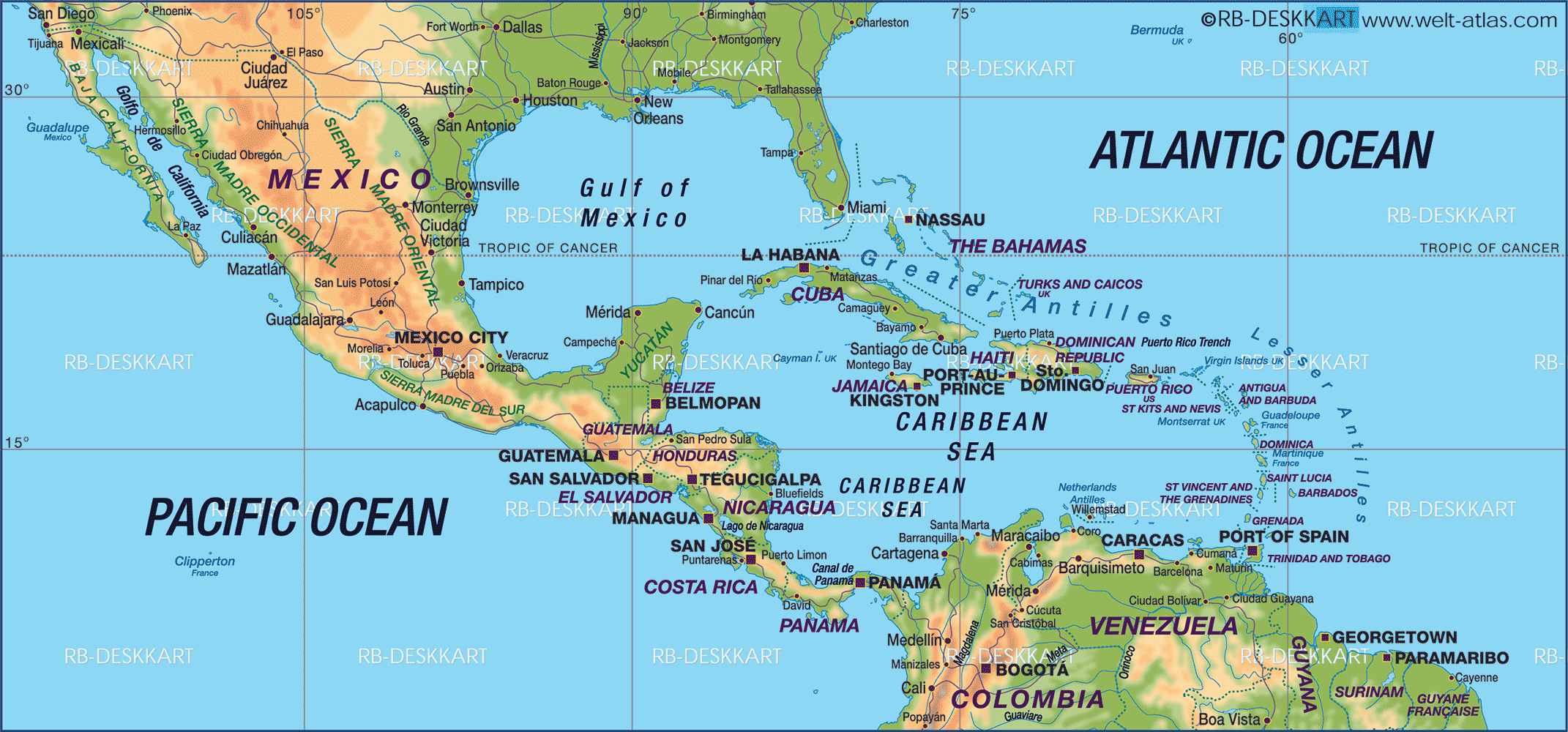
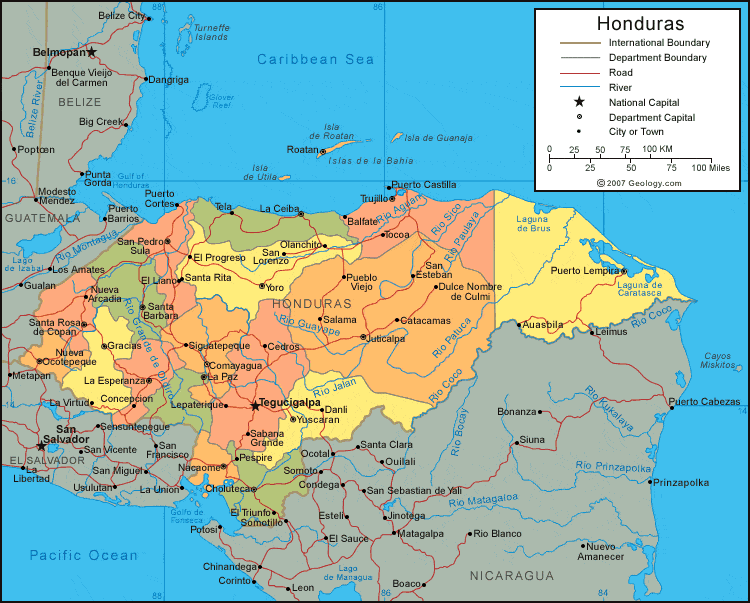
We did it, 27 months of Peace Corps in Honduras! We officially finished on September 24! It was definitely sad saying goodbye to friends both Honduran and Peace Corps but it was time and we were both ready to move on. It was definitely a great experience and we are glad that we did it. Was it what we expected? Of course not but we feel that we got a lot out of it and learned a lot about ourselves, Honduras, and of course lots of Spanish all the while helping people the most we could. We both drastically improved our Spanish levels and that is something that we really wanted to get out of this experience. We started at Novice High and Kevin ended at Intermediate High and Shannon at Advanced Mid. And we feel fairly comfortable conversing and can do everything that we need to. After a week in Tegucigalpa seeing doctors and dentists (we went two years without any worms or stomach problems!) we headed out on a ¨luxury¨ bus to Panama to begin our three months of travel in South America. We spent a night in Nicaragua, 8 hours in Costa Rica walking around, and a night on the bus and finally arrived in Panama after three days on a bus.
Panama City was amazing! After two years without seeing a big city it was very impressive (Shannon now realizes that after two years of no development she loves it). We didn´t realize how big it is and how many sky scrappers there are. We went to the canal (not that exciting because we were not able to see any ships go through) and walked all over the city. It was weird being able to walk around with a camera and not be afraid of being robbed! We then headed to Portobelo which is a tiny town on the Caribbean side of Panama. We took a 5 day sailing trip to Colombia and spent three days at the San Blas Islands, gorgeous white sand deserted islands off the coast of Panama. It was a great trip, our captain and chef were awesome and we got to see a ton of fish while snorkeling among the islands. Kevin saw a Nurse Shark but luckily Shannon missed that one! It was a great way to get to Colombia and we arrived in Cartagena as the sun was rising.
We are now in Cartagena, a quaint colonial town set on a bay. The entire city is surrounded by old walls that protected it and there is a lot to see and do. It is very developed and also a shock to us as we haven´t been any place like this in quite some time. It is a good start to our Colombian adventure. Next up, scuba diving in Taganga!
Panama City was amazing! After two years without seeing a big city it was very impressive (Shannon now realizes that after two years of no development she loves it). We didn´t realize how big it is and how many sky scrappers there are. We went to the canal (not that exciting because we were not able to see any ships go through) and walked all over the city. It was weird being able to walk around with a camera and not be afraid of being robbed! We then headed to Portobelo which is a tiny town on the Caribbean side of Panama. We took a 5 day sailing trip to Colombia and spent three days at the San Blas Islands, gorgeous white sand deserted islands off the coast of Panama. It was a great trip, our captain and chef were awesome and we got to see a ton of fish while snorkeling among the islands. Kevin saw a Nurse Shark but luckily Shannon missed that one! It was a great way to get to Colombia and we arrived in Cartagena as the sun was rising.
We are now in Cartagena, a quaint colonial town set on a bay. The entire city is surrounded by old walls that protected it and there is a lot to see and do. It is very developed and also a shock to us as we haven´t been any place like this in quite some time. It is a good start to our Colombian adventure. Next up, scuba diving in Taganga!
Thursday, September 23, 2010
Travels
So we have been very busy traveling lately (we know, hard life) first with Shannon’s mom and sister which was awesome! They came to our site for about a week and Shannon showed them the sites (Kevin had dengue for the second time and was stuck at home). She also took them to a school while she did her dental hygiene class so that they could see what a Honduran School was like. Needless to say, they now appreciate schools in the U.S. much more. Some of the teachers from Shannon’s English class to our house and brought traditional Honduran food for her mom and sister to try and we had a little fiesta. It was a good cultural exchange and we had fun. Then we went to the only lake in Honduras and to Copan to see the Mayan ruins (not as cool the second time) and even got a flat tire along the way. Luckily Kev could change it and as we found out, it is really cheap to repair tires here ($6 for two including labor). After Copan we headed to the North Coast and of course got another flat tire. This time a nice man with a gun in the back of his pants helped us change it. On the North Coast we stayed in Parque Nacional Pico Bonito which was just beautiful. We were in the middle of the jungle right by a river. We went snorkeling at Cayos Cochinos, a chain of islands off the coast which was awesome! Beautiful, crystal clear water and tons of fish. We ate some fried fish and randomly ran into a group of students from the university where Kevin works (small world). Kevin, Shannon, and Laurie went white water rafting on the río cangrejal which was a great experience. Kevin and Laurie fell out but Shannon hung on tight! After all this fun we had to drive all the way back to Catacamas to pick up the kitties for their journey to the U.S. They rode to Tegucigalpa sitting on Shannon’s lap (a 4 hour trip) and were actually good for the remaining 30 hours of their journey (thanks Mom and Laurie!). Now they are living it up in the U.S. and all our neighbors are jealous that we took our cats home and not them!
After Shannon’s mom and sister left we headed to the island of Utila off the north coast of Honduras. We spent about a week there getting our NAUI scuba certification. It was an awesome experience and Shannon wasn’t even scared. The course was really thorough, we started out skin diving (basically snorkeling and learning how to dive down) and slowly proceeded to scuba. We were on the second largest reef in the world and we saw a lot of cool fish and even some eels (no sharks which made Shannon very happy). The only problem we had was when Shannon getting stung by a jellyfish. We were at the end of a dive going back to the boat and she got stung on her wrist first (since her monkey arms were not fully covered by the wetsuit). Then as she was getting back on the boat she put her regulator in (following the rules like the obedient person she is) and there was a tentacle hanging from it which stung her lip and tongue. We’re assuming the poison went straight into her body via the nerves in her tongue and she had a super allergic reaction. Her back started spasing and it felt like someone was breaking the bones in it. The boat had to take her back to the shore and they took her to our room. She was in more pain than she had ever been in and they gave her muscle relaxers and anti-histamines which kicked in about an hour later. Kevin still had another dive to do so she made him go and he called our site-mate who happened to be there too and she came and took care of Shannon (best site-mate ever). Luckily Shannon survived with only a swollen lip and a rash all over her leg and arm (that took over a month and some steroids to disappear). She even went back the next day for some more diving! All in all, it was a great trip and we are now scuba certified!
Our last trip was to Nicaragua. We spent 10 days there and had a lot of fun, but overall it was like a nicer version of Honduras with volcanoes and tourism. We went to Granada which is a quaint colonial town with cobblestone streets. We took a day trip from there to Masaya Volcano about an hour away. We got to the volcano in the late afternoon and went to the top (a short walk from the parking lot) and were able to see the smoke and three of the five craters. We then walked to the old craters (two more) that are now dormant and had a view of the lagoon and town below. We then went to a bat cave where we had a billion zillion bats flying around us. Lastly we went to the top of the crater once it got dark to see the lava glow but it was pouring at that time so all we saw was a little red glow and tons of smoke. It was a fun trip though. From Granada we went to La Isla de Omotepe, a small island in the middle of Lake Cocibolca. We spent a day hiking Volcano Maderas, a dormant volcano with a crater lake at the top. It had been raining a lot so the lake was really full and muddy but it was a nice hike and we saw a few white faced monkeys and howler monkeys so that was awesome! We planned on going to some beaches on the island but rumor had it that they were all flooded due to the rains so we ended up leaving early and heading for Leon. Leon is a large but quaint town that saw a lot of fighting during the Contra Wars (read about them and how badly the U.S. treated Nicaragua) but has now recovered and is quite touristy. We explored the city and its many churches and went to some awesome volcanoes too. We went to the volcanoes with a great non-profit group, Quetzaltrekkers, which uses the money earned to support programs to get kids off the streets. We went to Volcano Telica which was a long, but easy hike to the top of an active volcano. We got there around noon and it started raining but we were still able to see down the deep crater to the bottom. We threw rocks down and listened to them crash. It was very smoky and sulfury but really cool looking. It was all rocks at the top with no vegetation. The next day we went volcano boarding down the youngest and most active volcano in Nicaragua, Volcano Cerro Negro. We hiked up and got to walk through the crater which looked like a war zone with huge hunks of broken rocks, tons of smoke, and the ground was hot to the touch. We then put on these fluorescent yellow mechanic suits, sat on this little board, and sledded down the lava rock covered hill. It sounds a lot scarier than it was, the first time we went pretty slowly; Shannon actually stopped a couple of times she was going so slowly. The second time we went a lot faster but Shannon still got passed by Kevin and another guy (we decided that the heavier you are the faster you go). It was really fun and pretty too. After that we headed back to Honduras with a stop in Estelí where we went on a tour of a cigar factory which was actually pretty interesting. We took the tour (and had to be translators for the people who didn’t speak Spanish) and got to see the whole process. We found out that there is not really much difference between cigars (even the really expensive ones and Cubans) and all cigars there were $1! The workers were allowed to smoke the cigars as they worked and one guy was puffing away on a huge one (Kevin took a picture with him). At the end of the tour we all got a cigar that we smoked in the cigar storage room (weird right?). It was a cool experience.
On our way back to Catacamas we stopped to visit our friend Patrick in the quaint little town of San Marcos de Colón right on the Honduran side of the border. It was nice and cool there and we could finally finish our on-going competition of who had the better house, Patrick or us (we won). It was relaxing and a good end to our trip.
After Shannon’s mom and sister left we headed to the island of Utila off the north coast of Honduras. We spent about a week there getting our NAUI scuba certification. It was an awesome experience and Shannon wasn’t even scared. The course was really thorough, we started out skin diving (basically snorkeling and learning how to dive down) and slowly proceeded to scuba. We were on the second largest reef in the world and we saw a lot of cool fish and even some eels (no sharks which made Shannon very happy). The only problem we had was when Shannon getting stung by a jellyfish. We were at the end of a dive going back to the boat and she got stung on her wrist first (since her monkey arms were not fully covered by the wetsuit). Then as she was getting back on the boat she put her regulator in (following the rules like the obedient person she is) and there was a tentacle hanging from it which stung her lip and tongue. We’re assuming the poison went straight into her body via the nerves in her tongue and she had a super allergic reaction. Her back started spasing and it felt like someone was breaking the bones in it. The boat had to take her back to the shore and they took her to our room. She was in more pain than she had ever been in and they gave her muscle relaxers and anti-histamines which kicked in about an hour later. Kevin still had another dive to do so she made him go and he called our site-mate who happened to be there too and she came and took care of Shannon (best site-mate ever). Luckily Shannon survived with only a swollen lip and a rash all over her leg and arm (that took over a month and some steroids to disappear). She even went back the next day for some more diving! All in all, it was a great trip and we are now scuba certified!
Our last trip was to Nicaragua. We spent 10 days there and had a lot of fun, but overall it was like a nicer version of Honduras with volcanoes and tourism. We went to Granada which is a quaint colonial town with cobblestone streets. We took a day trip from there to Masaya Volcano about an hour away. We got to the volcano in the late afternoon and went to the top (a short walk from the parking lot) and were able to see the smoke and three of the five craters. We then walked to the old craters (two more) that are now dormant and had a view of the lagoon and town below. We then went to a bat cave where we had a billion zillion bats flying around us. Lastly we went to the top of the crater once it got dark to see the lava glow but it was pouring at that time so all we saw was a little red glow and tons of smoke. It was a fun trip though. From Granada we went to La Isla de Omotepe, a small island in the middle of Lake Cocibolca. We spent a day hiking Volcano Maderas, a dormant volcano with a crater lake at the top. It had been raining a lot so the lake was really full and muddy but it was a nice hike and we saw a few white faced monkeys and howler monkeys so that was awesome! We planned on going to some beaches on the island but rumor had it that they were all flooded due to the rains so we ended up leaving early and heading for Leon. Leon is a large but quaint town that saw a lot of fighting during the Contra Wars (read about them and how badly the U.S. treated Nicaragua) but has now recovered and is quite touristy. We explored the city and its many churches and went to some awesome volcanoes too. We went to the volcanoes with a great non-profit group, Quetzaltrekkers, which uses the money earned to support programs to get kids off the streets. We went to Volcano Telica which was a long, but easy hike to the top of an active volcano. We got there around noon and it started raining but we were still able to see down the deep crater to the bottom. We threw rocks down and listened to them crash. It was very smoky and sulfury but really cool looking. It was all rocks at the top with no vegetation. The next day we went volcano boarding down the youngest and most active volcano in Nicaragua, Volcano Cerro Negro. We hiked up and got to walk through the crater which looked like a war zone with huge hunks of broken rocks, tons of smoke, and the ground was hot to the touch. We then put on these fluorescent yellow mechanic suits, sat on this little board, and sledded down the lava rock covered hill. It sounds a lot scarier than it was, the first time we went pretty slowly; Shannon actually stopped a couple of times she was going so slowly. The second time we went a lot faster but Shannon still got passed by Kevin and another guy (we decided that the heavier you are the faster you go). It was really fun and pretty too. After that we headed back to Honduras with a stop in Estelí where we went on a tour of a cigar factory which was actually pretty interesting. We took the tour (and had to be translators for the people who didn’t speak Spanish) and got to see the whole process. We found out that there is not really much difference between cigars (even the really expensive ones and Cubans) and all cigars there were $1! The workers were allowed to smoke the cigars as they worked and one guy was puffing away on a huge one (Kevin took a picture with him). At the end of the tour we all got a cigar that we smoked in the cigar storage room (weird right?). It was a cool experience.
On our way back to Catacamas we stopped to visit our friend Patrick in the quaint little town of San Marcos de Colón right on the Honduran side of the border. It was nice and cool there and we could finally finish our on-going competition of who had the better house, Patrick or us (we won). It was relaxing and a good end to our trip.
Sunday, August 1, 2010
Public Schools
So as you’ve probably gathered from our previous entries, the public schools here are pretty bad. In fact, we cannot really imagine a way to make them worse. To be a kindergarten teacher, you only have to finish eighth grade, to be an elementary school teacher you have to finish high school (with a “major” in teaching), and to be a high school teacher you are supposed to have a bachelor’s degree (no credential), but we have met plenty of high school teachers without a degree. It seems like there are never classes for a variety of reasons: strike (there are many possible reasons for this), a funeral (could be for a parent of a child, teacher, or any other person known or unknown), some kind of event (in the school, in the community), due to inclement weather, or for a variety of other reasons. The school day is supposed to be five hours long (7:00 or 7:30 A.M. to 12:00 or 12:30 P.M. or 12:00 or 12:30 to 5:00 or 5:30) but this hardly ever happens. In most schools that we have been to classes usually start at least half an hour late and get out half an hour early. Plus, there is usually an hour of snack/recess instead of the allotted 20 to 30 minutes. If a teacher does not show up for whatever reason there are no substitute teachers, the kids just go home. Needless to say, the kids don’t learn a whole lot. It is very depressing.
Teachers have no supplies (paper, pencils, chalk, markers) unless they buy them with their own money. School is free but parents have to buy uniforms and school supplies. Thus, some of the really poor children do not go to school because it is too expensive. Teachers have to make everything for their classrooms out of construction paper that they buy themselves. They often “laminate” things they want to keep nice by wrapping them in clear tape. One certainly learns to be resourceful spending time in Honduran schools! Often times there are not enough desks/tables or chairs and there are never enough textbooks. It is almost impossible to find storybooks in schools as these are very expensive and not sold in most places. The playgrounds do not usually have anything to play on, maybe some painted, half-buried tires to crawl through. Flower beds (if there are any) are lined with half buried soda bottles and plants are planted in old tires. .
Shannon has been doing a lot of observations for her English classes in order to see how the teachers are teaching English in their classes. She has had some interesting experiences. The first one went badly. Shannon got up early to catch a 6:00 A.M. bus and the teacher never got on. When she called the teacher, she told her that she had another engagement and wouldn’t be able to make it (mind you she is a teacher and this is her job) but that she had left a message for Shannon on her voicemail. Turns out she had the wrong number so there was no message. Shannon had to stay on the bus an hour until they passed a bus going in the opposite direction to which she could hop on.
Another one of the observations involved both of us (Shannon was told it would be dangerous to go alone) walking uphill (literally no flat or downhill parts) for about three miles. After walking an hour uphill in the heat and humidity (yes it is already hot at 6:00 A.M.) and stopping to ask directions about a million times, we finally made it dripping in sweat. The school was two rooms for six grades with only one teacher. He had a helper, a “muchacha”, who is not qualified to teach and who the municipality pays L1,000 per month (about $50). Minimum wage is L5,500 per month so this is certainly not legal. The teacher is trying to get the Ministry of Education to provide another qualified teacher for the school but has not had any luck yet. Although he was the only teacher and could only be with half of the kids at a time, the kids were extremely well-behaved. They all participated, listened quietly (a miracle here), and really seemed to want to learn. It was amazing!
Another school Shannon went to had three teachers for six grades. Each class has two grades but unlike combination classes in the U.S., they are not grouped by age/grade. First and fifth grade are together, second and fourth, and third and sixth. The different grades sit on different sides of the classroom and one group works on an activity while the teacher works with the other group. Usually the group working on the activity messes around and yells a lot. In this particular school, one teacher was pretty good and controlled her classroom well, one was ok, and one was terrible. In the terrible class the side of the class not learning English was yelling, wrestling, throwing things, and one boy was sitting with his bare feet on his desk blowing nonstop on a whistle! Shannon could barely hear let alone concentrate. The teacher did nothing to control them and when she finally could not take it anymore, she sent the kids not learning English home (it was 10:30). The rest of the kids got out an hour early to make goals for the soccer games they were having the next day (classes were cancelled of course). This involved kids ranging from 9-12 years old running around with machetes chopping giant branches to the correct lengths (a little bit of math perhaps?). It was a madhouse with more machetes than Shannon had ever seen and all manned by children! Luckily nobody got hurt, even though many of the machetes were thrown through the air at other kids, and all the branches were cut.
Moral of the story, if you are ever feeling bored or a little too happy and optimistic, go to almost any public school in Honduras and all of that will change. It makes schools in the U.S. look like shining specimens of gold and makes us so sad for all these Honduran children who are not getting the quality education they deserve.
Teachers have no supplies (paper, pencils, chalk, markers) unless they buy them with their own money. School is free but parents have to buy uniforms and school supplies. Thus, some of the really poor children do not go to school because it is too expensive. Teachers have to make everything for their classrooms out of construction paper that they buy themselves. They often “laminate” things they want to keep nice by wrapping them in clear tape. One certainly learns to be resourceful spending time in Honduran schools! Often times there are not enough desks/tables or chairs and there are never enough textbooks. It is almost impossible to find storybooks in schools as these are very expensive and not sold in most places. The playgrounds do not usually have anything to play on, maybe some painted, half-buried tires to crawl through. Flower beds (if there are any) are lined with half buried soda bottles and plants are planted in old tires. .
Shannon has been doing a lot of observations for her English classes in order to see how the teachers are teaching English in their classes. She has had some interesting experiences. The first one went badly. Shannon got up early to catch a 6:00 A.M. bus and the teacher never got on. When she called the teacher, she told her that she had another engagement and wouldn’t be able to make it (mind you she is a teacher and this is her job) but that she had left a message for Shannon on her voicemail. Turns out she had the wrong number so there was no message. Shannon had to stay on the bus an hour until they passed a bus going in the opposite direction to which she could hop on.
Another one of the observations involved both of us (Shannon was told it would be dangerous to go alone) walking uphill (literally no flat or downhill parts) for about three miles. After walking an hour uphill in the heat and humidity (yes it is already hot at 6:00 A.M.) and stopping to ask directions about a million times, we finally made it dripping in sweat. The school was two rooms for six grades with only one teacher. He had a helper, a “muchacha”, who is not qualified to teach and who the municipality pays L1,000 per month (about $50). Minimum wage is L5,500 per month so this is certainly not legal. The teacher is trying to get the Ministry of Education to provide another qualified teacher for the school but has not had any luck yet. Although he was the only teacher and could only be with half of the kids at a time, the kids were extremely well-behaved. They all participated, listened quietly (a miracle here), and really seemed to want to learn. It was amazing!
Another school Shannon went to had three teachers for six grades. Each class has two grades but unlike combination classes in the U.S., they are not grouped by age/grade. First and fifth grade are together, second and fourth, and third and sixth. The different grades sit on different sides of the classroom and one group works on an activity while the teacher works with the other group. Usually the group working on the activity messes around and yells a lot. In this particular school, one teacher was pretty good and controlled her classroom well, one was ok, and one was terrible. In the terrible class the side of the class not learning English was yelling, wrestling, throwing things, and one boy was sitting with his bare feet on his desk blowing nonstop on a whistle! Shannon could barely hear let alone concentrate. The teacher did nothing to control them and when she finally could not take it anymore, she sent the kids not learning English home (it was 10:30). The rest of the kids got out an hour early to make goals for the soccer games they were having the next day (classes were cancelled of course). This involved kids ranging from 9-12 years old running around with machetes chopping giant branches to the correct lengths (a little bit of math perhaps?). It was a madhouse with more machetes than Shannon had ever seen and all manned by children! Luckily nobody got hurt, even though many of the machetes were thrown through the air at other kids, and all the branches were cut.
Moral of the story, if you are ever feeling bored or a little too happy and optimistic, go to almost any public school in Honduras and all of that will change. It makes schools in the U.S. look like shining specimens of gold and makes us so sad for all these Honduran children who are not getting the quality education they deserve.
Subscribe to:
Posts (Atom)